There are many different types of distributions in statistics, but here are some of the most common ones: Normal distribution: Also known as the Gaussian distribution, the normal distribution is a bell-shaped curve that is symmetrical around the mean. It is used to model many naturally occurring phenomena, such as the height of individuals in […]
Continue Reading
There are several statistics that are important for business analysis, including: Descriptive statistics: Descriptive statistics are used to summarize and describe important features of a data set. They can include measures such as mean, median, mode, range, standard deviation, and variance. Inferential statistics: Inferential statistics are used to draw conclusions about a population based on […]
Continue Reading
Machine learning algorithms with Python can be used to solve a wide range of real-world problems across various industries. Here are some examples: Healthcare: Machine learning algorithms can be used to analyze medical data to identify patterns and predict disease outcomes. For example, predicting the likelihood of a patient developing a certain disease based on […]
Continue Reading
To become a good data scientist, there are several key qualities that one should possess. Here are some of them: Strong analytical skills: Data scientists should be able to analyze complex data and draw meaningful insights from it. This requires strong analytical skills, including the ability to think critically and logically. Programming skills: Data scientists […]
Continue Reading
Digital transformation is the process of using digital technologies to fundamentally change how organizations operate and deliver value to customers. As with any major business trend, there are several myths and realities associated with digital transformation. Here are a few of them: Myth: Digital transformation is all about technology. Reality: While technology plays a critical […]
Continue Reading
Siemens is a German multinational company that operates in several industries, including energy, healthcare, and transportation. One of Siemens’ major businesses is its Digital Industries division, which provides software solutions for manufacturing companies. In 2017, Siemens began implementing Industry 4.0 technologies in its own factories to improve efficiency, quality, and productivity. Siemens’ Amberg factory in […]
Continue Reading
Digital transformation and Industry 4.0 refer to the integration of technology into various aspects of industries and businesses, leading to increased efficiency, productivity, and profitability. Here are some innovative examples of digital transformation and Industry 4.0: Smart factories: Smart factories are automated manufacturing facilities that use technology like the Internet of Things (IoT), artificial intelligence […]
Continue Reading
Industry 4.0, also known as the Fourth Industrial Revolution, refers to the integration of advanced technologies such as artificial intelligence, the internet of things (IoT), robotics, and cloud computing into manufacturing and other industries. It is characterized by the digitalization and automation of processes, the use of real-time data, and the ability to make decentralized […]
Continue Reading
How to Gather Customer Data through a questionnaire? Let us learn how to gather customer data. A well-defined goals are the best way to assure a good questionnaire design. When the goals of a study can be expressed in a few clear and concise sentences, the design of the questionnaire becomes considerably easier. To effectively […]
Continue Reading
What tools are used in Define Phase of six sigma? A Six Sigma team uses a number of tools in the Define phase to identify and define problem areas or opportunities for improvement. The tools include: Project charter is a document that provides a clear, concise description of the business needs that a project is intended […]
Continue Reading
Understanding Statistical and Practical Significance What is Statistical significance? Statistical significance is the probability that the result of a given study could have occurred purely by chance. It reflects the degree to which observed results are true. Hypothesis tests aim to determine if the observed difference is statistically significant. What is practical significance? Practical significance […]
Continue Reading
What is Project Closure in Six Sigma Typically, by describing a project closure, you can identify project completion criteria. This, in turn, helps identify performance improvements and additional opportunities. It is a formal project summation in which the project team can officially close the project. It allows for the quick handover of deliverables and documentation. […]
Continue Reading
What do you understand by Theory of Constraints (ToC)? The Theory of Constraints (TOC) is a management approach to managing the weakest link in a process. A process can have one or more weak links, called constraints, that can be anything that prevents the process from performing to its maximum potential. TOC contends that a […]
Continue Reading
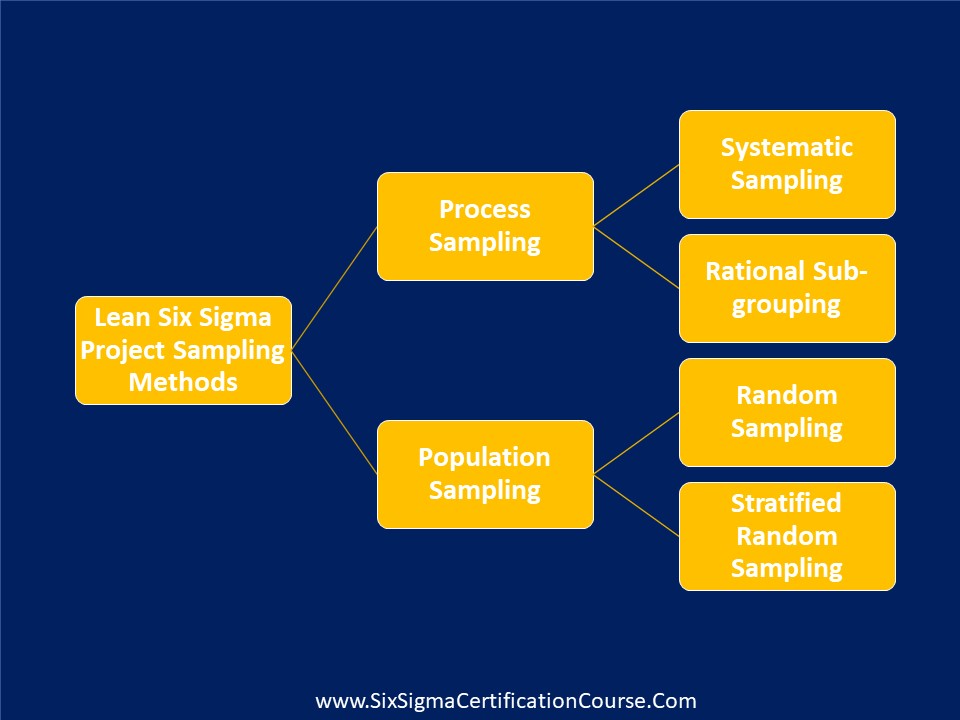
Selecting the Right Sampling Method for LSS Projects There are different reasons why you would go for sampling.If you are a Lean Six Sigma Green Belt or Lean Six Sigma Black Belt, or just an aspirant or a Quality Engineer, you will encounter several scenarios where you have to sample the data during data collection […]
Continue Reading